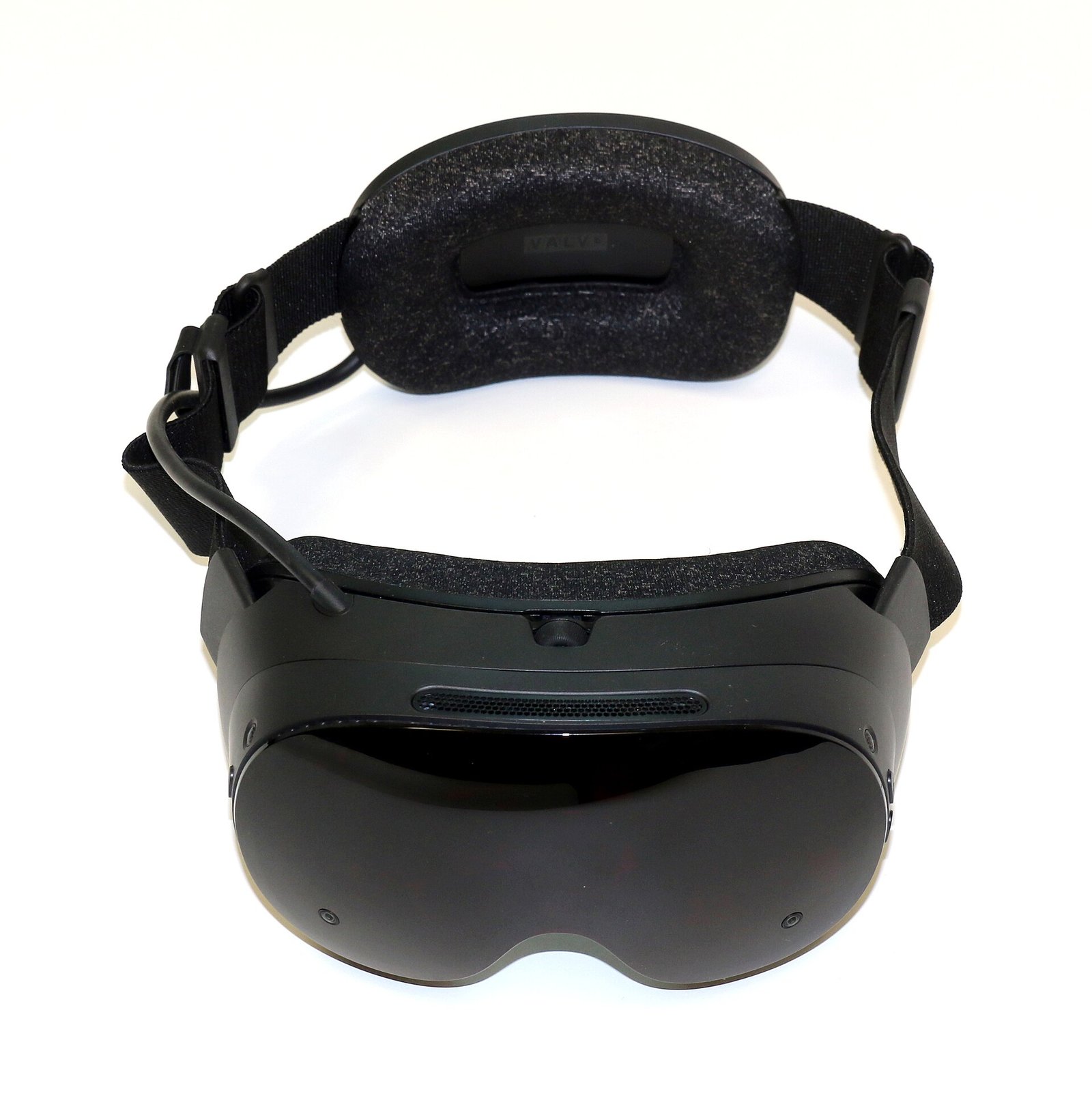
Valve rarely explains its thinking in public, so this week’s comments from Seoul matter. The Valve VR strategy came under the spotlight at a small developer event on 27 October, when a Steam business team member told Korean indie studios that the company still believes in virtual reality. He also admitted something few hardware makers say out loud. Many Steam Frame owners mostly play flat games on it, and the headset costs more than Valve wanted.
Below, I look at what was actually said, why it matters for players and developers, and what it tells us about where PC VR goes next.
What Valve said in Seoul
The event was Steam Indie Connect. Valve co-hosted it with the Busan Indie Connect Festival committee and the Korea Creative Content Agency. According to Inven Global’s English report, Tom Giardino and Marc Wilkinson from Valve’s Steam business team spent most of the night on AI clones, Next Fest and wishlists. VR came up in the final question.
The head of a VR studio asked whether curation, visibility and policies for VR games would change now that Valve sells its own headset. He also passed on a fear among fans that Valve had given up on VR. Giardino’s reply opened with a clear line: “We still believe in virtual reality.”
However, the rest of the answer was frank. Giardino said many Steam Frame owners use the headset as a display for the ordinary games in their library. He described VR’s core problem as a chicken-and-egg loop. Developers wait for a bigger audience, while players wait for more games. Meanwhile, flat games keep improving, and a big new release seems to land every week. Inven reports that he named Escape from Tarkov as an example of that competition.
The apology over price
Giardino then turned to cost. He said rising RAM and memory prices pushed up the cost of all hardware, including Valve’s. Valve had hoped to price the Steam Frame lower to bring in new users. In Inven’s English version, he said: “Moments when we could have welcomed many new customers became reasons to wait or hesitate on VR.” He added, “I feel sorry to VR developers.”
One caveat matters here. The session ran in English with live Korean interpretation, and no public recording has surfaced. VR.org notes that Inven’s English edition first printed “We feel sorry” and later changed it to “I feel sorry”. So the meaning is clear, but the exact wording is a translation of a translation.
Why the Valve VR strategy leans on flat games
At first glance, the flat-games admission sounds like bad news for VR. Yet Valve sold the headset this way from the start. VR.org points out that Valve’s launch post called the Frame a headset “built for both VR and non-VR gameplay”. In other words, owners are doing exactly what the box promised.
As Road to VR’s Scott Hayden argues, the bet seems to be scale. If enough people buy a SteamOS headset for their whole library, the VR install base grows as a side effect. Developers may then find it easier to justify VR projects. That is a sensible plan on paper. Still, it only works if those owners actually open VR games once the headset is on.
Here, the Steam Frame has a real advantage. Someone who already wears a headset for a flat game is one click away from a VR title. For a VR studio, that is the shortest possible route to a sale. The missing piece is a store that nudges people towards VR at the right moment, and Valve did not answer that part of the question.
The price problem in context
Right now, the Steam Frame costs $1,059 with 256GB of storage or $1,299 with 1TB. VR.org notes that the base price is $60 more than the old Valve Index full kit. For comparison, Meta’s Quest 3S starts at $349.99 and the Quest 3 costs $599.99. So the Frame sits well above the mainstream entry point.
What does the Frame offer for that money? Coverage from Metaverse Watcher lists a Snapdragon 8 Gen 3 chip, 16GB of RAM, eye-tracked foveated streaming and a bundled 6GHz wireless adapter. It also ships with Half-Life: Alyx and controllers. On the other hand, its passthrough is black and white, and it sells through a reservation queue rather than off the shelf.
Valve has blamed memory costs since launch day, so the reason is not new. What is new is Valve linking that price to lost momentum for developers. A launch window is when curious newcomers look hardest at a headset. At over $1,000, many of them seem to have waited.
Korea is still waiting too
There is an awkward detail for the room in Seoul. VR.org reports that Valve’s launch post listed South Korea as “coming soon”, and Valve has not given a date since. As a result, the developers hearing the apology could not yet buy the headset in their own country.
Where Valve’s VR audience really is
The most useful part of the answer got the least attention. Giardino described the Steam Frame as one piece of a wider VR ecosystem. He pointed to Valve’s work on the Steam Link app for Meta Quest and on OpenXR support, so people with other headsets can still use SteamVR.
The numbers back this up. VR.org cites Valve’s September hardware survey, which put the Frame at 0.41% of VR headsets on Steam after 13 days of sales. In the same table, Quest 3, Quest 2 and Quest 3S together made up 63.77%. Put simply, most of Valve’s VR customers reach Steam through Meta hardware.
That makes Meta’s own plans important. On its third-quarter earnings call, Meta said it will only ship new VR devices when it has major breakthroughs. Its filing also blamed lower Quest sales for a drop in Reality Labs revenue. If Quest hardware slows down, the Valve VR strategy loses some of the fresh users it relies on.
What this means for players and developers
For players, the takeaway is reassuring but limited. Valve is not walking away from VR. It recently brought Half-Life: Alyx to the Frame as a standalone game, and VR.org reports that the PC version gained foveated rendering. Those are not the moves of a company quitting the medium.
For developers, the picture is tougher. There was no promise of better VR shelf space, new curation tools or a VR-first push in SteamOS. Instead, the Valve VR strategy on show was sympathy plus an honest view of the market. Studios targeting Steam should still plan around Quest owners using Steam Link, with the Frame as a premium extra.
Meanwhile, rival platforms keep moving. Google’s Android XR is spreading to glasses such as the XREAL AURA, which I covered this week. Meta is shifting its focus to its VR Glasses next spring. Valve’s bet on a do-everything SteamOS headset is a different path, and it will take time to judge.
What to watch next
- Any Steam store changes that surface VR games to Frame owners.
- A Korean release date or wider rollout for the Steam Frame.
- Memory prices, which Valve says shaped the current cost.
- Future Steam hardware surveys, which will show whether the Frame’s share grows.
FAQ
Is Valve giving up on VR?
No. Valve’s Tom Giardino said, “We still believe in virtual reality,” and pointed to ongoing work on Steam Link for Quest and OpenXR.
Why did Valve apologise?
He said higher memory prices kept the Steam Frame more expensive than planned. That made new buyers wait, which hurt VR developers counting on fresh customers.
How much does the Steam Frame cost?
It costs $1,059 for 256GB or $1,299 for 1TB, according to Valve’s pricing as reported by VR.org and Metaverse Watcher.
Can I play SteamVR games without a Steam Frame?
Yes. Quest owners can use the Steam Link app, and other OpenXR headsets also work with SteamVR.
If you play on Quest instead of a Frame, you can use my promo code VRCGUY when you buy VR games on the Meta Horizon Store. It is a small way to support this blog while you build your library.
Sources
- Inven Global: Developers Fear AI Slop and Clones, Valve Answers Directly
- Road to VR: Valve: We Still Believe in VR, But Content is Still ‘Chicken-and-Egg’ Dilemma
- VR.org: Valve Apologized to VR Developers in Seoul Over What the Steam Frame Costs
- Metaverse Watcher: Best VR Headsets of 2026
- VR.org: Meta Now Ships VR Hardware Only on ‘Major Breakthroughs’
Featured image: Steam Frame by Davepape, via Wikimedia Commons, licensed CC BY 4.0.